Trading Discipline vs Motivation: What Actually Works

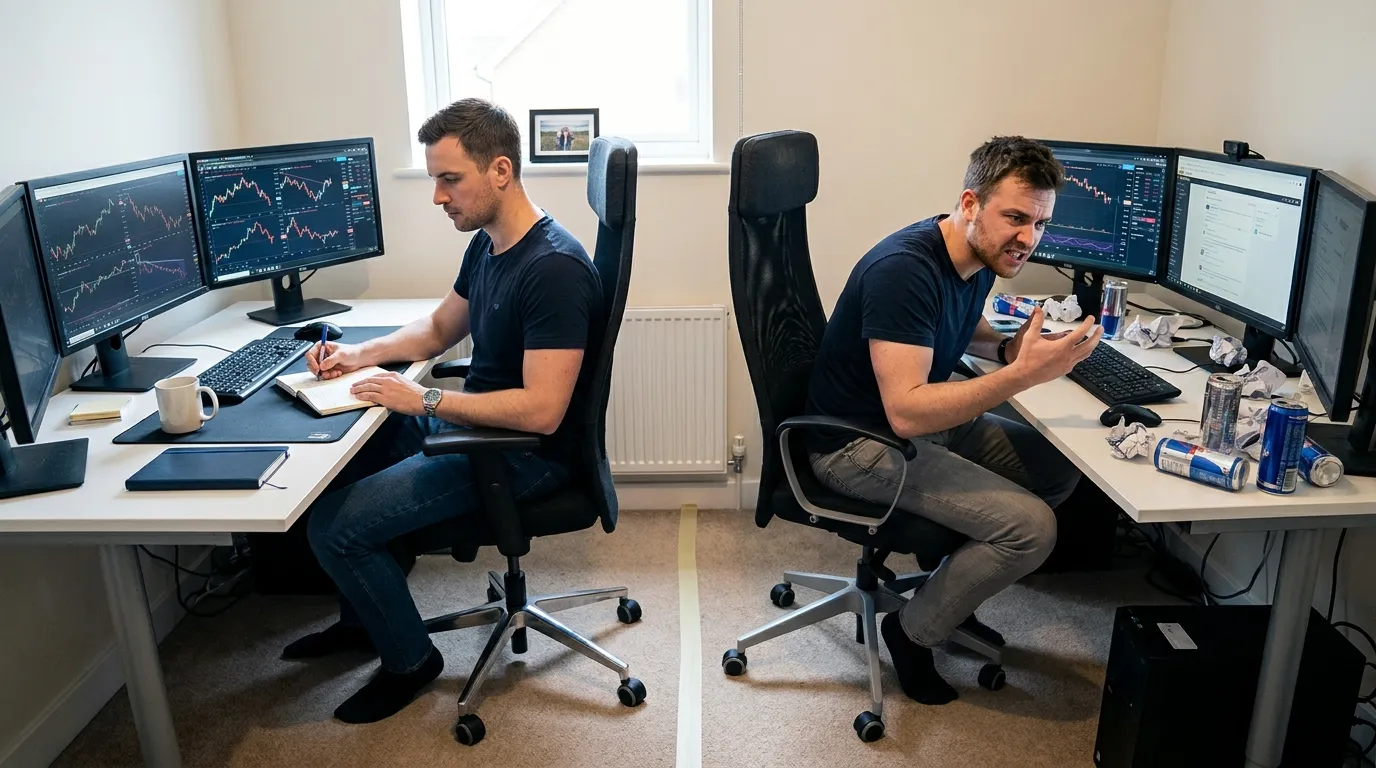
Every trader has felt it: the fired-up Monday morning where the charts make sense, the plan feels bulletproof, and losses seem like something that happens to other people. Then Thursday comes. The market chops sideways, a stop-loss gets hit twice in a row, and that same trader is suddenly hitting refresh on their phone at 2 a.m. instead of following their process.
That swing isn’t a character flaw. It’s what happens when a trading career is built on motivation instead of discipline — two things that get used interchangeably but behave completely differently under pressure.
This article breaks down why that distinction matters more than almost anything else in trading psychology, and what actually replaces motivation once it inevitably runs out.
Motivation Is a Feeling. Discipline Is a System.
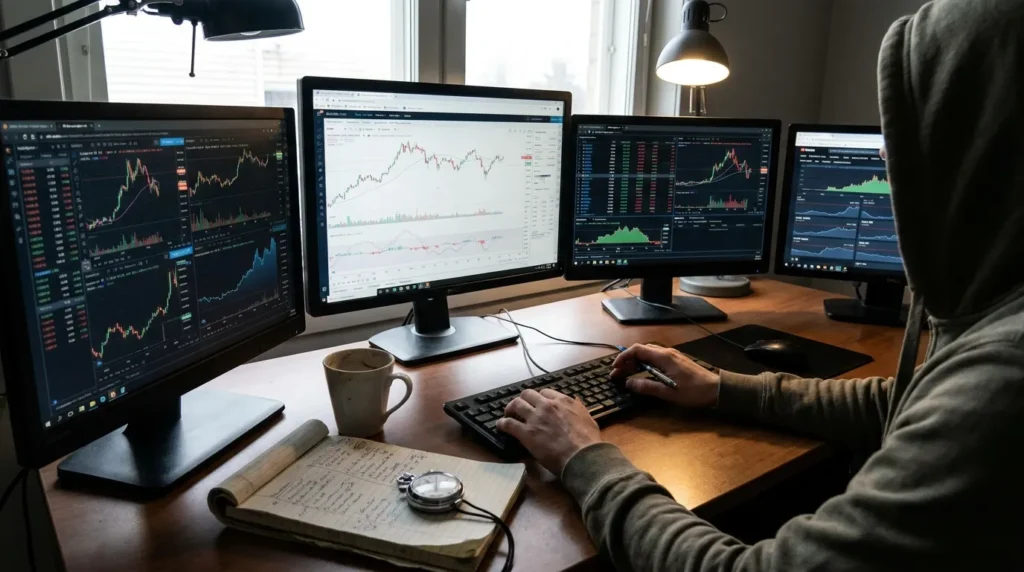
Motivation is an emotional state. It rises when things are going well — a winning streak, a clean breakout, a green account balance — and it collapses just as fast when conditions turn. It’s borrowed energy, not built energy, and markets are specifically designed to drain it. Drawdowns, choppy sessions, and unexpected news spikes will always outlast anyone’s supply of enthusiasm.
Discipline is different because it doesn’t ask how you feel. It’s a set of pre-decided rules that execute regardless of mood: risk per trade, entry criteria, exit rules, and a daily process checklist. A disciplined trader on a losing day and a disciplined trader on a winning day take the exact same actions, because the actions were decided in advance — not in the moment.
This is the core reason the “trading discipline vs motivation” question isn’t really a fair fight. Motivation is weather. Discipline is climate control.
Why Motivation Fails Traders Specifically
Trading has a few unique features that make it especially hostile to motivation-based approaches:
- Randomness in the short term. A good process can still lose five trades in a row. Motivation reads that as failure; discipline reads it as statistically normal variance.
- No external accountability. There’s no boss checking in, no coach on the sideline. If the system runs on motivation alone, there’s nothing left when it dips.
- Fast feedback loops. Unlike most skills, trading gives instant, often painful feedback. That feedback hits emotion directly, which is exactly where motivation lives — and exactly where it’s most vulnerable.
Traders who rely on motivation tend to trade more when they’re winning (overconfidence) and less, or worse, revenge-trade when they’re losing (frustration). Both are the opposite of what a sound risk management approach requires.
What Discipline Actually Looks Like in Practice
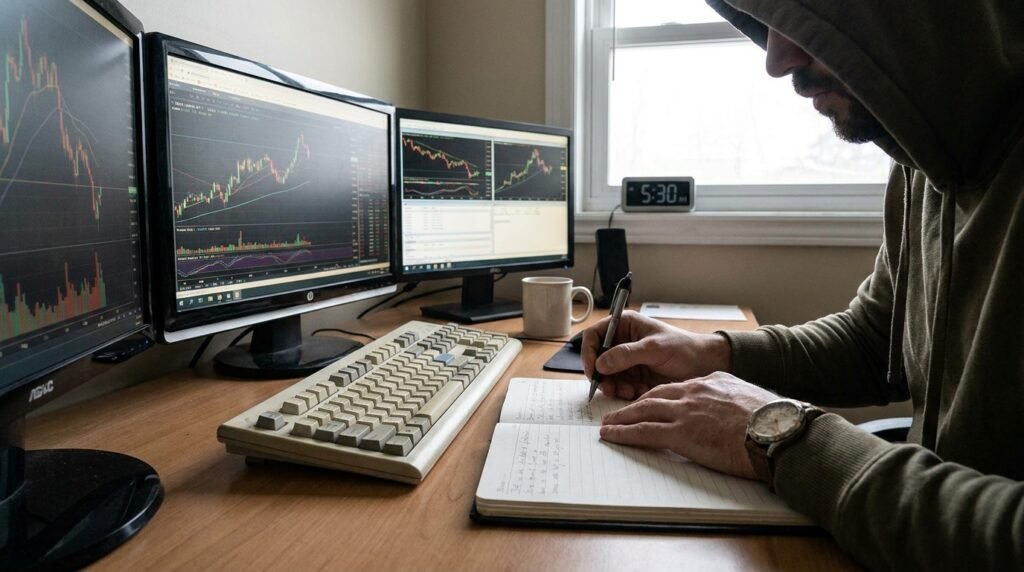
Discipline isn’t willpower or gritting your teeth harder. It’s structural. It’s built once, during a calm moment, so it doesn’t need to be rebuilt during a stressful one. In practice, that looks like:
- A written trading plan that defines setups, entry triggers, position sizing, and exit rules before the market opens — not while a trade is live.
- Fixed risk-per-trade rules, often 0.5%–2% of account equity, decided in advance and never adjusted mid-trade based on conviction or frustration.
- A pre-trade checklist that has to be satisfied before an order goes in, removing the “gut feeling” decision point entirely.
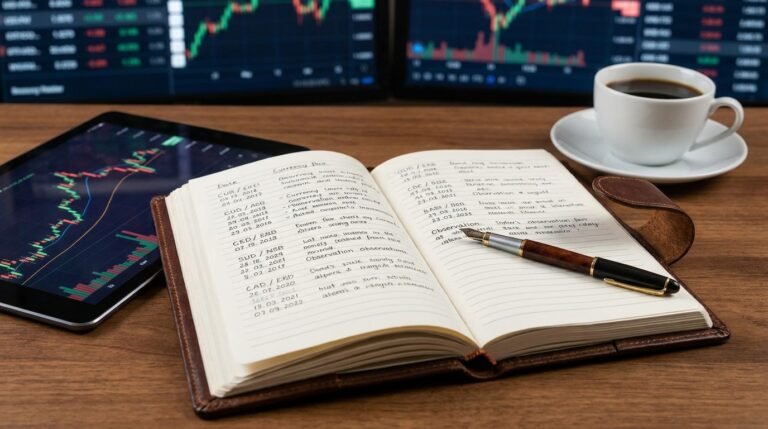
- A trading journal that logs not just the outcome of each trade, but whether the plan was actually followed — because a losing trade that followed the rules is a process success, even if it’s a financial loss.
- Defined stop conditions for the day or week — for example, stopping after two consecutive losses or hitting a daily loss limit, regardless of how “sure” the next setup looks.
None of this depends on feeling driven. It depends on the system being built well enough that following it is the path of least resistance.
The Role Motivation Still Plays
This isn’t an argument that motivation is worthless. It has a real job — just a narrower one than most traders assume. Motivation is useful for getting a system built in the first place: sitting down to write a trading plan, backtesting a strategy, or reviewing a losing month honestly. Those are one-time or occasional efforts where a burst of energy helps.
The mistake is expecting that same burst of energy to still be there for trade #4,000, in a choppy market, at a time of day when focus is already low. Discipline is what’s supposed to be there instead — and the entire point of building a system is to stop depending on motivation to show up at all.
How to Build Discipline When It Doesn’t Come Naturally

Discipline is trainable, and it doesn’t require becoming a different kind of person. A few practical starting points:
- Shrink the rules until they’re impossible to break. A vague rule like “manage risk well” gets ignored under pressure. A specific rule like “risk exactly 1% per trade, no exceptions” is either followed or clearly broken — there’s no gray area to rationalize around.
- Automate what can be automated. Using tools like a lot size calculator or forex risk calculator before every trade removes a manual decision point where emotion could otherwise creep in.
- Review process, not just P&L. At the end of each week, the question isn’t just “did I make money?” — it’s “did I follow my own rules?” A trader who follows their process through a losing week is in a far better position than one who broke their rules into a winning one.
- Expect the dip, and plan for it. Since motivation is guaranteed to fade, decide now what happens when it does — whether that’s a scheduled break, a reduced position size, or a return to demo trading until consistency returns.
The Bottom Line
The “trading discipline vs motivation” debate resolves quickly once the roles are separated correctly. Motivation can start the process. It cannot sustain it. Every trader who has lasted years in the market, rather than months, has done so by building rules that don’t need enthusiasm to function — because the market was never going to provide enthusiasm consistently in the first place.