What Is a Margin Call in Forex? (Beginner’s Guide)

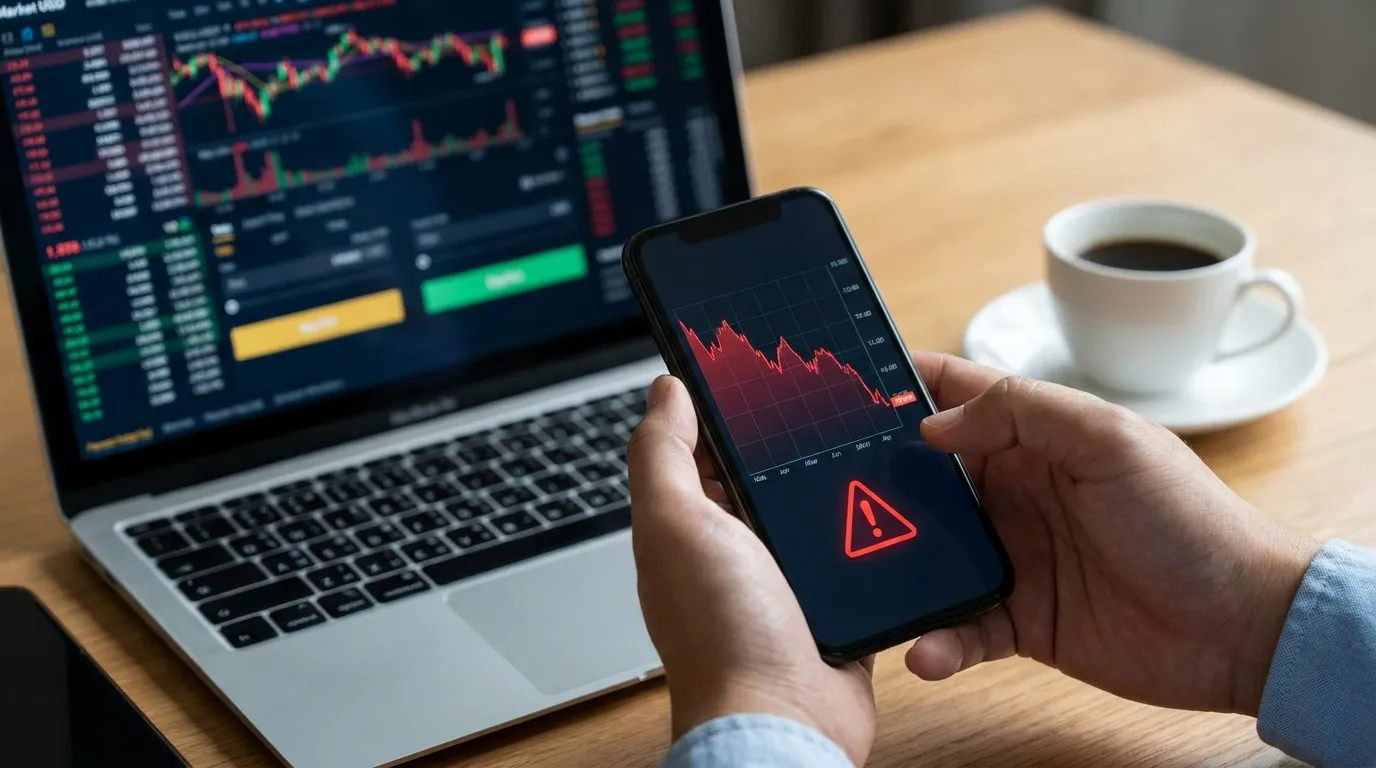
A margin call in forex is a warning from your broker.
It tells you that the equity in your account has fallen too close to the amount needed to keep your open trades running.
When this happens, you usually have two choices. Add more funds to your account, or close some positions to free up margin.
If you do neither, your broker will typically start closing trades for you. This is often called a stop out.
Margin calls are not a punishment. They are a safety mechanism built into leveraged trading. Brokers use them to prevent your account balance from going negative.
Understanding margin calls matters most for new traders. Beginners often use too much leverage without realizing how quickly a margin call can appear during a fast moving market.
- How Margin Works Before a Margin Call Happens
- Why Margin Calls Happen
- Margin Call Level vs Stop Out Level
- Real Example: How a Margin Call Unfolds
- What Happens When You Get a Margin Call
- How to Avoid a Margin Call
- Margin Call Mistakes Beginners Make
- US Regulations and Margin Calls
- Tools to Help You Avoid Margin Calls
How Margin Works Before a Margin Call Happens
To understand a margin call, you first need to understand margin itself.
Margin is not a fee. It is a portion of your account balance that your broker sets aside as a good faith deposit while a trade is open.
Here are the core terms you will see on every trading platform.
Balance The total funds in your account, not counting open trades.
Equity Your balance plus or minus the current floating profit or loss on open trades.
Used Margin The amount currently locked up to keep your open positions active.
Free Margin Equity minus used margin. This is what you have available to open new trades or absorb losses.
Margin Level This is the key number for margin calls. It is calculated as:
Margin Level = (Equity ÷ Used Margin) × 100
Most brokers set a margin call level around 100 percent. Some set it as low as 50 percent. When your margin level drops to that threshold, the margin call is triggered.
A related tool worth using here is a Pip Value Calculator, since knowing exactly how much each pip move is worth in dollars helps you estimate how fast your margin level can change.
Why Margin Calls Happen
Margin calls almost always come down to one root cause. Losses have reduced your equity faster than your risk plan accounted for.
Common triggers include:
- Overleveraging. Opening positions far larger than your account can support.
- No stop loss. Letting a losing trade run without a defined exit point.
- Holding too many trades at once. Each open position uses margin, so several trades at the same time can drain free margin quickly.
- Sudden volatility. News events or gaps can move price fast enough that losses build before you can react.
- Ignoring position sizing. Trading the same lot size on every account balance, regardless of risk.
Beginners often fall into more than one of these at the same time. A trader who skips position sizing and also avoids stop losses is combining two of the fastest routes to a margin call.
If overtrading is part of the problem, our guide on overtrading in forex breaks down how taking too many trades compounds this risk.
Margin Call Level vs Stop Out Level
These two terms confuse a lot of new traders, so it helps to separate them clearly.
| Term | What It Means | What Happens |
|---|---|---|
| Margin Call Level | Your margin level has dropped to the broker’s warning threshold | You get a notification, but you can still act |
| Stop Out Level | Your margin level has dropped further, past the point of no return | The broker automatically closes positions, starting with the biggest loser |
Think of the margin call as a warning light on a car dashboard. The stop out is what happens if you keep driving and ignore it.
According to <cite index=”54-1″>a margin call occurs when your broker notifies you that your margin level has fallen below the required minimum threshold, known as the margin call level</cite>, as described by educational resources at Babypips. If the account keeps losing value after that point, forced liquidation follows.
Real Example: How a Margin Call Unfolds
Let’s walk through a simple example using round numbers.
Account balance: $1,000 Position: 1 mini lot (10,000 units) of EUR/USD Required margin: $200 Broker’s margin call level: 100 percent
At the start, your equity is $1,000 and your used margin is $200. That gives a margin level of 500 percent, which is healthy.
Now the trade moves against you and you are down $700 in floating losses.
Your equity is now $300 ($1,000 minus $700). Used margin is still $200.
Margin Level = ($300 ÷ $200) × 100 = 150 percent
Still above the 100 percent threshold, but getting close. If the trade loses another $100, equity drops to $200, and the margin level hits exactly 100 percent. This is the point where the margin call is triggered.
A Forex Risk Calculator can help you check, before you ever enter a trade, how far price needs to move against you before this kind of scenario becomes a real risk.
What Happens When You Get a Margin Call
Once the margin call is triggered, most brokers follow a similar sequence.
Step 1: Notification You receive an alert through the platform, an email, or both. Some brokers only send one notification even if the margin level keeps falling.
Step 2: Restricted trading Many brokers block you from opening new positions once you are on margin call. You can usually still close trades manually.
Step 3: Time to react Depending on how fast the market moves, you might have minutes or seconds to add funds or reduce exposure. Fast moving markets can leave almost no reaction time.
Step 4: Automatic liquidation If the margin level keeps falling and reaches the stop out level, the broker begins closing positions automatically, typically starting with the largest losing trade first.
Step 5: Remaining balance After liquidation, whatever equity is left remains in your account. In extreme volatility, especially with high leverage, some traders can end up with a balance near zero.
How to Avoid a Margin Call
The good news is that margin calls are largely preventable with basic risk discipline.
1. Use proper position sizing. Never calculate your lot size by guessing. Base it on your account balance, stop loss distance, and a fixed risk percentage. Our Lot Size Calculator does this automatically.
2. Always use a stop loss. A stop loss caps your downside before a small loss becomes an account threatening one.
3. Avoid excessive leverage. Just because your broker offers 50:1 leverage does not mean you should use all of it on every trade.
4. Watch your margin level, not just your balance. Your balance can look fine while your margin level is quietly dropping because of floating losses.
5. Limit the number of open trades. Each new position uses more margin. Spreading your account too thin across many trades increases margin call risk.
6. Keep a cash buffer. Do not use your entire account balance as available margin. Leave room to absorb normal volatility.
7. Track your drawdown. Our Forex Drawdown Calculator shows how a losing streak affects your account, so you can catch problems before they reach margin call territory.
If you trade gold, volatility can move margin levels especially fast. The XAUUSD Profit Calculator helps you estimate exposure before entering a position.
Margin Call Mistakes Beginners Make
Mistake 1: Treating leverage as free money. Leverage increases both potential gains and potential losses. It does not create extra capital.
Mistake 2: Adding to a losing position. Averaging down on a trade that already triggered a margin call warning usually accelerates the problem instead of solving it.
Mistake 3: Ignoring correlation between trades. Holding several correlated pairs, like EUR/USD and GBP/USD at the same time, can mean one market move drains margin across multiple positions at once.
Mistake 4: Not knowing the broker’s specific stop out level. This number varies by broker. Always check your account terms rather than assuming a standard percentage.
Mistake 5: Trading without calculating position size first. Reviewing how to calculate position size in forex before entering trades removes most of the guesswork that leads to margin calls.
US Regulations and Margin Calls
For US based traders, forex trading is regulated by the Commodity Futures Trading Commission and overseen by the National Futures Association.
US regulations cap retail forex leverage at 50 to 1 on major currency pairs, which is lower than the leverage offered in many other regions. Lower leverage caps mean margin requirements are higher, which can reduce how quickly a margin call is triggered compared to accounts using very high leverage.
The NFA has published extensive investor guidance stating that <cite index=”41-1″>customers remain fully responsible for any losses incurred and, as necessary, for meeting margin calls, including making up any deficiencies that exceed margin deposits</cite>. In other words, a margin call is the trader’s responsibility to resolve, not the broker’s.
Charles Schwab’s investor education materials echo this point, <cite index=”45-1″>explaining that margin trading can amplify gains but is a double edged sword that can also quickly magnify losses beyond the initial investment</cite>.
Regulations and specific margin call levels can vary outside the US, so always confirm the exact rules with your own broker and regulator.
Tools to Help You Avoid Margin Calls
Rather than reacting to a margin call after it happens, use these free tools before you place a trade.
- Forex Risk Calculator: Confirms how much of your account is genuinely at risk per trade.
- Lot Size Calculator: Prevents oversized positions that eat up too much margin.
- Pip Value Calculator: Shows exactly how much each pip movement affects your equity.
- Forex Drawdown Calculator: Reveals how a losing streak compounds and threatens your margin level.
- XAUUSD Profit Calculator: Useful for gold traders, since gold’s volatility can shrink margin levels quickly.
Also see our related guides on how to calculate lot size in forex and take profit levels in forex for a fuller picture of trade planning.
FAQ
1. What triggers a margin call in forex? A margin call is triggered when your account’s margin level, calculated as equity divided by used margin, falls to or below your broker’s set threshold. This usually happens because open trades are losing money faster than your account can absorb.
2. Can I lose more money than I deposited from a margin call? It depends on your broker and account type. Some brokers offer negative balance protection, which prevents your account from going below zero. Others do not, so it is important to check your broker’s terms before trading with leverage.
3. How do I know my broker’s margin call level? Check your account agreement or platform settings. Margin call levels commonly sit between 50 and 150 percent, but this varies by broker and by account type, so always confirm directly.
4. Is a margin call the same as a stop out? No. A margin call is a warning that your margin level has dropped too low. A stop out is the automatic closing of positions once your margin level falls even further, past the point your broker allows.
5. Can I avoid a margin call by adding funds? Yes, depositing additional funds raises your equity, which can lift your margin level back above the call threshold. This only works if done before the stop out level is reached.
6. Does lower leverage reduce margin call risk? Generally yes. Lower leverage means a larger margin requirement relative to your trade size, which tends to keep your margin level higher for longer during a losing streak.
7. Why did my position close automatically without a warning? In fast moving markets, price can move from a safe margin level to the stop out level within seconds. Some brokers only send one notification, so the closure can feel sudden even though the margin level technically triggered it.
Financial Disclaimer
This article is for educational purposes only and is not financial advice. Forex trading involves substantial risk of loss and is not suitable for all investors. Leverage can magnify both gains and losses. US retail forex leverage is capped at 50:1 by CFTC regulation. Always confirm current rules with your broker and regulator before trading.
Conclusion
A margin call in forex is not a mystery. It is simply your broker telling you that your account’s equity has dropped too close to what is needed to keep your trades open.
The traders who rarely see margin calls are not lucky. They calculate position size before entering a trade, use stop losses consistently, and avoid stacking too much leverage onto one account.