What is Forex Trading? A Beginner’s Complete Guide

TABLE OF CONTENTS
- What is Forex Trading?
- How Does Forex Trading Work?
- Forex Market Basics: Pairs, Pips, and Lots
- The Role of Leverage and Margin
- Who Participates in the Forex Market?
- Global Regulations Protecting Traders
- Pros and Cons of Forex Trading
- Common Beginner Mistakes to Avoid
1. WHAT IS FOREX TRADING?
Forex trading is the practice of buying and selling currencies with the goal of making a profit from changes in their exchange rates. The term “forex” stands for “foreign exchange,” and it represents the global marketplace where currencies are traded. Unlike stock markets, which operate from physical locations, the forex market is decentralized and operates electronically over the counter (OTC) through a network of banks, brokers, and trading platforms.
When you engage in forex trading, you are essentially making a bet on whether one currency will strengthen or weaken against another. For example, if you believe the US Dollar will increase in value relative to the Euro, you might buy USD and sell EUR. If the exchange rate moves in your predicted direction, you profit from the difference.
The forex market is the world’s largest and most liquid financial market, with an estimated daily trading volume exceeding 6 trillion US dollars according to the Bank for International Settlements. This enormous size means that currency pairs can be bought and sold almost instantly at any time during market hours, making forex accessible to traders worldwide.
Key Point: Forex trading involves predicting currency movements and profiting from the resulting price changes, not physically exchanging money for travel or business purposes.
2. HOW DOES FOREX TRADING WORK?
Forex trading operates on a simple principle: you simultaneously buy one currency while selling another. This is why currencies are always quoted in pairs, such as EUR/USD (Euro/US Dollar) or GBP/JPY (British Pound/Japanese Yen).
Here is how a basic forex trade works:
- You decide to trade the GBP/USD pair
- You open a buy position because you believe the British Pound will strengthen against the US Dollar
- The current price is 1.2700, meaning one GBP equals 1.27 USD
- You purchase 100,000 units of GBP (called a standard lot) by simultaneously selling 127,000 USD
- The price moves to 1.2750, confirming your prediction
- You close your position by selling the GBP and buying back the USD
- Your profit is the difference: (1.2750 minus 1.2700) × 100,000 = 500 USD
This example demonstrates the core mechanism: you buy low and sell high to profit. However, forex trading typically involves leverage, which amplifies both potential gains and losses. This is a critical concept for beginners to understand before opening a live trading account.
The Role of Brokers:
Forex traders cannot access the interbank market directly. Instead, you must open an account with a regulated forex broker who provides a trading platform, market data, and the ability to execute trades. Brokers make money through spreads (the difference between buy and sell prices) or commissions on each trade you place.
3. FOREX MARKET BASICS: PAIRS, PIPS, AND LOTS
To trade forex successfully, you must understand three fundamental concepts.
Forex Pairs:
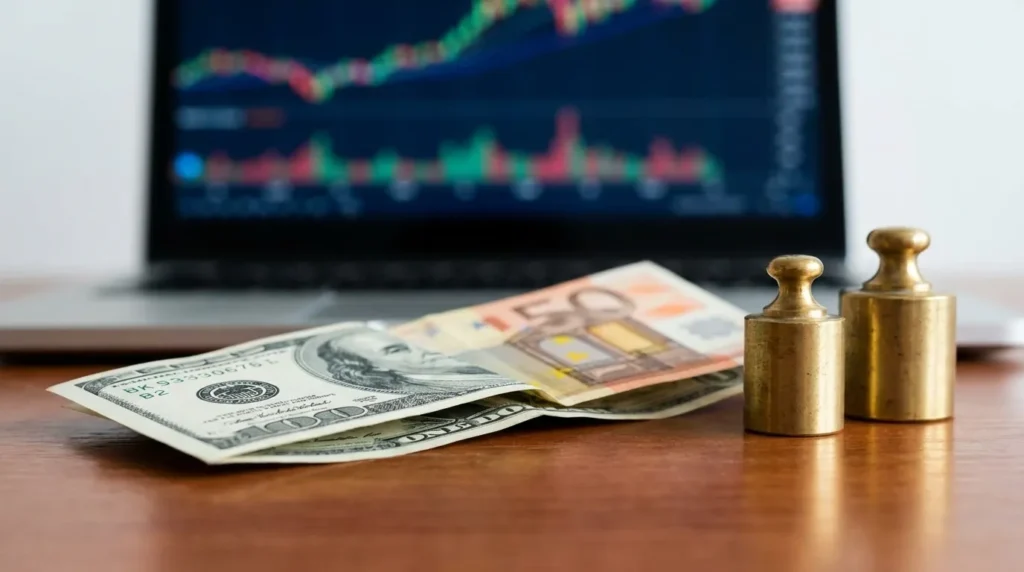
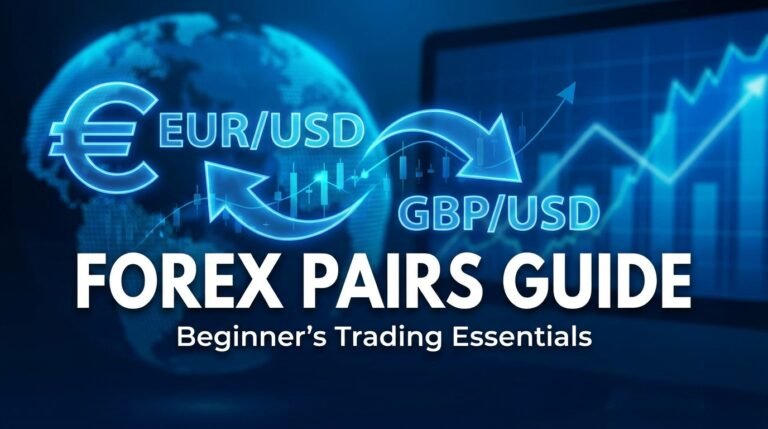
A currency pair consists of two currencies: the base currency and the quote currency. In the pair EUR/USD, the Euro is the base currency and the US Dollar is the quote currency. The price shown (for example, 1.0850) represents how many units of the quote currency you need to purchase one unit of the base currency.
Major pairs involve the US Dollar, such as EUR/USD, GBP/USD, and USD/JPY. These pairs have the highest liquidity and tightest spreads, making them ideal for beginners. Minor pairs exclude the US Dollar, such as EUR/GBP or AUD/CAD. Exotic pairs involve one major currency and one currency from a developing economy, such as EUR/TRY.
Pips (Percentage in Points):

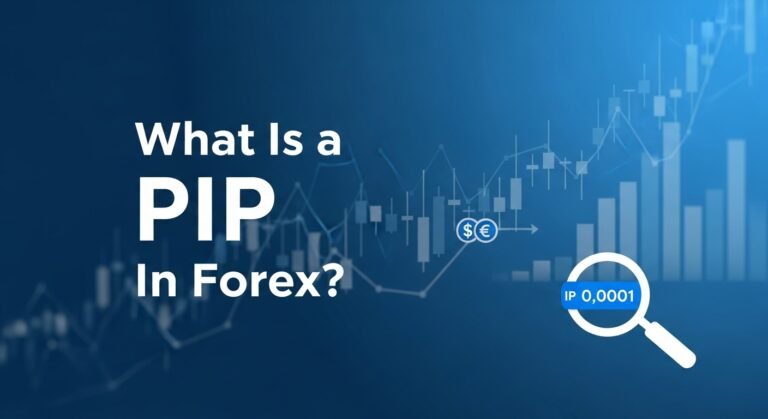
A pip is the smallest price movement in a currency pair. For most pairs, one pip equals 0.0001, or 0.01 percent. For pairs involving the Japanese Yen, one pip equals 0.01 because the Yen is quoted without two decimal places. Understanding pips is essential because your profit and loss are calculated in pips.
If you buy EUR/USD at 1.0850 and sell at 1.0860, you have profited 10 pips. To calculate your profit in dollars, you need to know your position size, measured in lots.
Lots (Position Size):
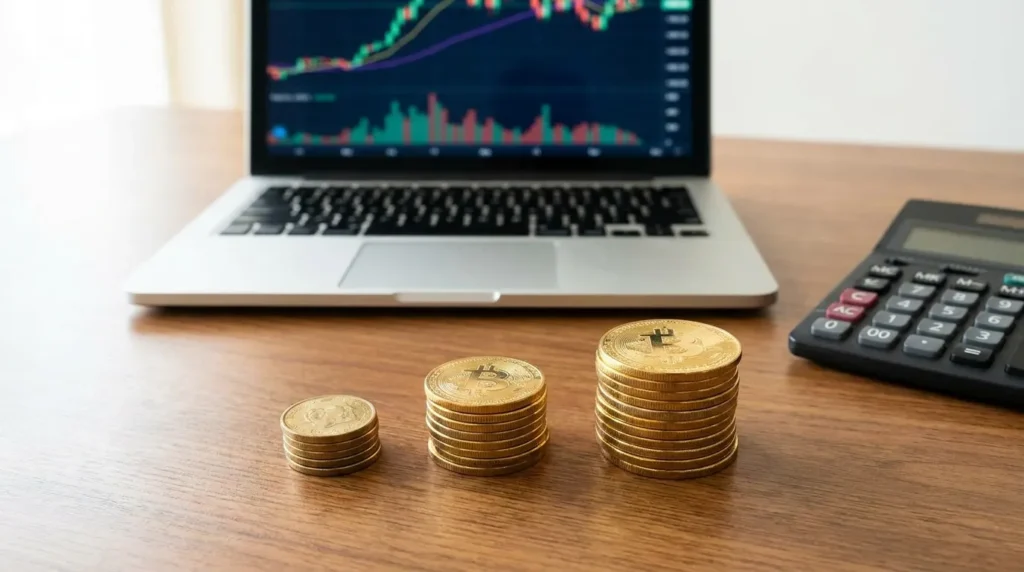
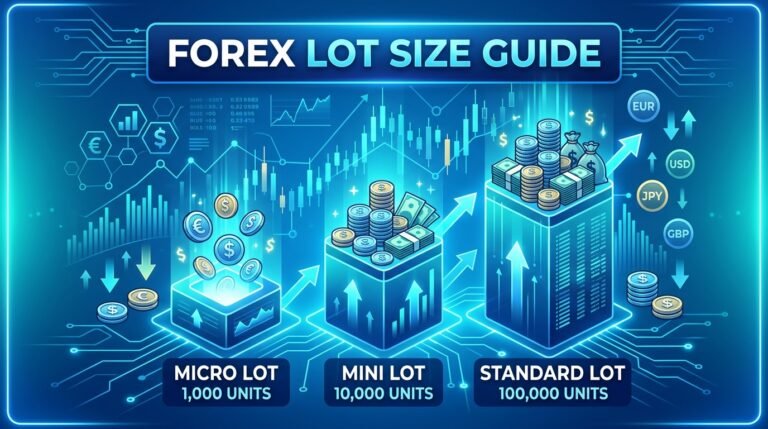
A lot is a standardized unit of currency. A standard lot equals 100,000 units of the base currency. A mini lot equals 10,000 units, and a micro lot equals 1,000 units. Most beginner traders start with micro or mini lots to limit their risk exposure while learning.
If you trade a standard lot of EUR/USD and the price moves 10 pips in your favor, your profit equals 100 USD (10 pips × 10 USD per pip). With a micro lot, the same 10 pip movement profits only 1 USD. You can use the Pip Calculator on forextoolboxpro.com to quickly convert pip movements into your home currency.
4. THE ROLE OF LEVERAGE AND MARGIN
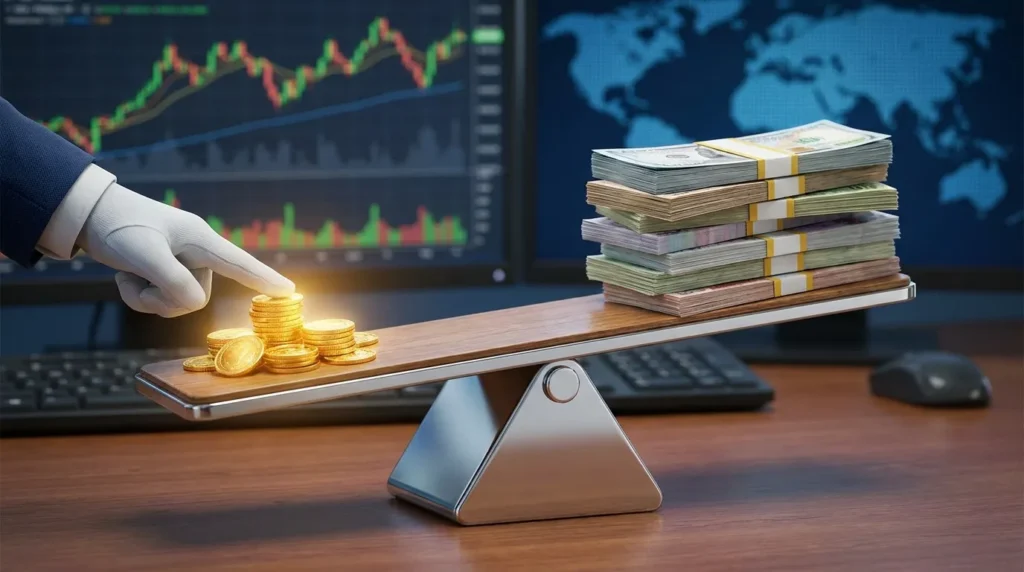
Leverage is perhaps the most important concept for beginner traders to understand because it is both a powerful advantage and a significant risk.
What is Leverage?
Leverage allows you to control a larger position with a smaller deposit. For example, with 50:1 leverage, you can control a 50,000 USD position with a deposit of just 1,000 USD. This amplifies potential profits, but it also amplifies losses. If the market moves 1 percent against you with 50:1 leverage, you lose 50 percent of your deposit.
Global Leverage Regulations:
Different regions have different regulatory limits on leverage for retail traders. In the United States, the CFTC (Commodity Futures Trading Commission) limits leverage to 50:1 for major pairs. In the European Union and United Kingdom, the ESMA and FCA limit leverage to 30:1. In Australia, ASIC limits leverage to 30:1. These regulations exist to protect traders from excessive losses.
Professional traders in some regions may access higher leverage if they meet specific criteria, but most beginners should avoid pursuing maximum leverage. Instead, focus on managing your risk using proper position sizing and stop losses.
Understanding Margin:
Margin is the amount of money you must deposit with your broker to open a leveraged position. If you want to buy 1 standard lot of EUR/USD (100,000 EUR) with 50:1 leverage, your broker requires approximately 2,000 USD in margin. This margin is held as collateral; it is not a fee or cost.
A margin call occurs when your losses reduce your account balance below the required margin level. If your margin drops below the maintenance requirement (typically 50 percent of initial margin), your broker will automatically close your positions to prevent further losses. To avoid margin calls, use the Lot Size Calculator on forextoolboxpro.com to determine the appropriate position size for your account.
5. WHO PARTICIPATES IN THE FOREX MARKET?
The forex market includes diverse participants with different motivations and trading timeframes.
Central Banks: Central banks intervene in forex markets to influence currency values and implement monetary policy. When a central bank announces interest rate decisions, currencies often move sharply.
Commercial and Investment Banks: Banks execute the vast majority of forex transactions, trading on behalf of clients and their own accounts. The interbank market is where the true price discovery happens.
Hedge Funds and Institutional Investors: Large financial institutions trade currency for speculative purposes or to hedge currency risk in their investment portfolios.
Corporations: Multinational companies trade forex to convert revenues from different countries into their home currency. For example, a US technology company earns revenue in Euros and needs to convert it to Dollars.
Money Changers and Travel Services: Currency exchange services at airports and travel agencies participate in small volumes of the forex market to serve customers.
Retail Traders: Individual traders like you make up a small percentage of total volume but are increasingly important participants. Retail traders typically use online brokers to access the market.
Speculators: Traders who speculate on currency movements for profit make up a significant portion of trading activity. The forex market provides leverage and liquidity that attracts speculators globally.
6. GLOBAL REGULATIONS PROTECTING TRADERS
Important Note: Forex trading is regulated differently in each country. The information below applies to major regions, but you must verify the regulations in your specific location before opening an account.
United States (CFTC and NFA):
In the US, the Commodity Futures Trading Commission (CFTC) and the National Futures Association (NFA) regulate forex brokers. Requirements include 50:1 maximum leverage for retail traders, segregation of client funds, and mandatory risk disclosures. US-based brokers must implement these rules strictly.
United Kingdom and European Union (FCA and ESMA):
The Financial Conduct Authority (FCA) regulates UK brokers, while the European Securities and Markets Authority (ESMA) sets guidelines for EU member states. Both require 30:1 maximum leverage for retail traders, negative balance protection (you cannot lose more than your deposit), and segregated client funds. These regulations are generally considered protective of retail traders.
Australia (ASIC):
The Australian Securities and Investments Commission (ASIC) limits leverage to 30:1 for retail traders and requires segregated client funds. ASIC enforces strict disclosure requirements and prohibits misleading marketing claims.
Other Regions:
Regulations vary in other countries. Some countries have minimal forex regulation, while others restrict or prohibit retail forex trading entirely. Always verify that your broker is regulated in your jurisdiction before depositing money.
7. PROS AND CONS OF FOREX TRADING
| PROS | CONS |
|---|---|
| High liquidity: currencies can be bought/sold instantly | High leverage risk: leverage amplifies losses as well as profits |
| 24/5 market access: trade Monday through Friday around the clock | Requires significant knowledge: technical and fundamental analysis skills needed |
| Low barriers to entry: open an account with minimal deposit | Emotional challenges: managing fear and greed in fast moving markets |
| Leverage available: amplify returns on small account sizes | Leverage-related losses: most retail traders lose money due to overleveraging |
| Diverse pairs: hundreds of currency combinations to trade | Time consuming: requires continuous learning and market monitoring |
| No short selling restrictions: profit equally from rising or falling currencies | Geopolitical risks: unexpected government policy changes move currencies sharply |
| Low spreads on major pairs: competitive trading costs | Market gap risk: markets open with price gaps on Monday mornings, limiting stop loss protection |
8. GETTING STARTED: ESSENTIAL STEPS
Step 1: Educate Yourself
Before risking real money, spend weeks or months learning forex concepts. Read trading books, watch educational videos, and understand the relationship between interest rates, inflation, and currency values. This foundation prevents costly beginner mistakes.
Step 2: Choose a Regulated Broker
Select a broker regulated by CFTC (US), FCA (UK), ASIC (Australia), or ESMA (EU). Verify regulation on the broker’s website and cross check with the regulator’s official website. Check broker reviews but be aware that disgruntled traders may post negative reviews regardless of broker quality.
Step 3: Start with a Demo Account
Open a free practice account with your chosen broker and trade with virtual money for at least one month. This allows you to learn the platform, test strategies, and experience emotions without risking real capital.
Step 4: Develop a Trading Plan
Before opening a real account, write down your trading rules: which pairs you will trade, your risk tolerance, your profit targets, your stop loss rules, and the maximum leverage you will use. A written plan prevents emotional trading decisions.
Step 5: Start Small with Real Money
When you begin trading with real capital, keep position sizes tiny. Use the Lot Size Calculator to ensure your position size matches your account size and risk tolerance. Most professionals recommend risking no more than 1 to 2 percent of your account per trade.
Step 6: Use Risk Management Tools
Always place a stop loss order on every trade to define your maximum loss. Never move your stop loss in an unfavorable direction (a practice called “revenge trading”). Use the Risk Calculator on forextoolboxpro.com to confirm that your position size, stop loss level, and potential loss align with your risk tolerance.
9. COMMON BEGINNER MISTAKES TO AVOID
Using Excessive Leverage:
The most common mistake is using too much leverage and trading too large a position. New traders see 50:1 leverage as an opportunity to control huge positions, but this typically results in account losses. A 2 percent unfavorable market move with 50:1 leverage and a small account can wipe out your trading capital.
Overleveraging without stops:
Trading without stop loss orders is essentially gambling. A market spike against your position can cause catastrophic losses before you can manually close the trade. Always use stop losses, without exception.
Trading during illiquid periods:
The forex market has high and low liquidity periods. Trading during news events, market opens, or when major banks are closed (like December holidays) often results in slippage (worse prices than expected) and wider spreads. Beginners should trade only during peak market hours when liquidity is high.
Revenge trading after losses:
After a loss, emotional traders often increase position sizes to “make back” losses quickly. This typically leads to larger losses. After a loss, reduce position size and slow down.
Ignoring fundamental analysis:
Forex prices move on central bank decisions, economic data (employment, inflation, GDP), geopolitical events, and interest rate differentials. Traders who ignore these factors and rely purely on technical analysis often get caught on the wrong side of major moves. Learn to read economic calendars and understand what data releases matter.
Trading too many pairs:
Beginners often scatter their attention across dozens of currency pairs. Instead, become expert in trading 1 to 3 pairs like EUR/USD, GBP/USD, and USD/JPY. Deep knowledge of a few pairs outweighs shallow knowledge of many pairs.
10. FREQUENTLY ASKED QUESTIONS
Q1: Can I make consistent profit from forex trading?
It is theoretically possible, but statistically difficult. Studies show that approximately 90 percent of retail forex traders lose money, primarily due to overleveraging and poor risk management. Consistent profits require excellent discipline, proper risk management, and often years of experience. Most successful traders focus on risk management (keeping losses small) rather than making home runs (chasing large profits).
Q2: How much money do I need to start forex trading?
You can open a forex account with as little as 100 USD at many brokers, but this is too small to trade safely. Most professionals recommend starting with at least 2,000 to 5,000 USD. This allows you to trade micro or mini lots with proper position sizing (1 to 2 percent risk per trade). With less money, your position sizes must be so small that profit potential becomes negligible even when correct.
Q3: Is forex trading the same as binary options or day trading?
No. Forex trading involves buying and selling actual currencies in the global forex market. Binary options are completely different instruments that bet on whether prices will be above or below a level at a specific time. Day trading is a strategy (closing trades within the day) that can be applied to forex, stocks, or other markets. You can day trade forex or swing trade forex (holding positions multiple days or weeks).
Q4: What are forex trading sessions and why do they matter?
The forex market trades 24 hours a day, but activity concentrates in specific geographic sessions: the Asia session (Tokyo), the London session (Europe), and the New York session (North America). Different currency pairs have different volume and volatility in each session. For example, EUR/USD has tight spreads during London and New York sessions but wider spreads during Asia. Read our article on forex trading sessions to learn optimal trading times for different pairs.
Q5: Should I trade forex if I have other financial obligations?
No, not until you have an emergency fund (3 to 6 months of expenses), paid off high interest debt, and already invested in retirement accounts. Forex involves substantial risk of losing your entire deposit. You should never trade money you cannot afford to lose completely. If losing your entire trading deposit would harm your financial stability, you are not ready.
Q6: How do I calculate position size for my account?
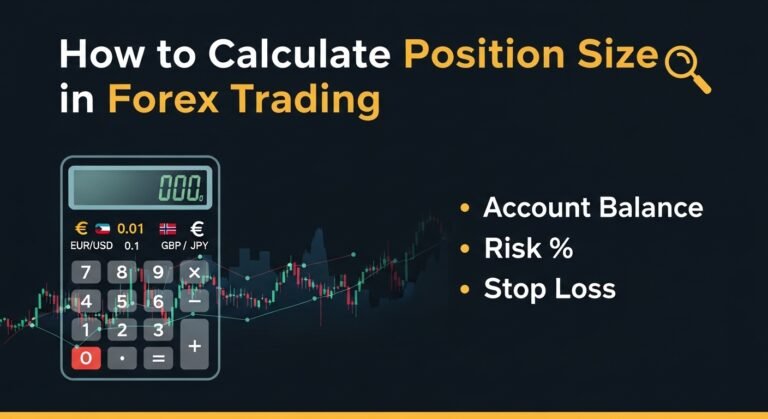
Use the Lot Size Calculator at forextoolboxpro. You input your account size, risk percentage (typically 1 to 2 percent), currency pair, and your stop loss level in pips. The calculator automatically determines the correct lot size. This prevents the common mistake of oversizing positions. For example, if you have a 10,000 USD account, risk 2 percent per trade (200 USD), and place a 50 pip stop loss on EUR/USD, the correct position size is approximately 2.0 mini lots.
CONCLUSION
Forex trading is the practice of profiting from currency exchange rate movements using a broker’s trading platform and leverage. The forex market is the world’s largest financial market, offering 24/5 access, high liquidity, and leverage that amplifies both gains and losses.
Before you open a real trading account, understand that the forex market differs fundamentally from other investments. Most retail traders lose money, primarily because they use excessive leverage and ignore risk management. Your success depends not on finding the perfect trading strategy but on managing risk discipline: sizing positions correctly, using stop losses without exception, and risking only 1 to 2 percent of your account per trade.
Start your journey by opening a demo account, spending months in education and practice, and developing a written trading plan. Only then should you risk real capital, and only then with tiny positions that align with your account size.
Next Steps:
If you are serious about learning forex trading, use the free tools at forextoolboxpro.com to deepen your knowledge: calculate position sizes with the Lot Size Calculator, understand your risk with the Risk Calculator, and convert pips to profit with the Pip Calculator. For more beginner guidance, read our articles on risk management strategies and how to set stop loss orders. These foundational concepts matter more than any trading strategy.
The forex market will always exist. There is no rush. Spend the time to learn properly, and you will have a significant advantage over traders who jump in without education.
FINANCIAL DISCLAIMER
IMPORTANT DISCLAIMER:
This article is educational content only and is not financial advice, trading recommendations, or an offer to buy or sell financial instruments. Forex trading involves substantial risk of financial loss. You may lose some or all of your initial investment. Past performance does not guarantee future results.
Risk Warnings:
Leverage trading in forex can result in significant losses. Most retail traders lose money. Forex trading is not suitable for all investors. Do not trade money you cannot afford to lose completely. Understand all risks associated with leverage before opening a trading account.