Forex vs Stock Market: Key Differences Every Trader Should Know

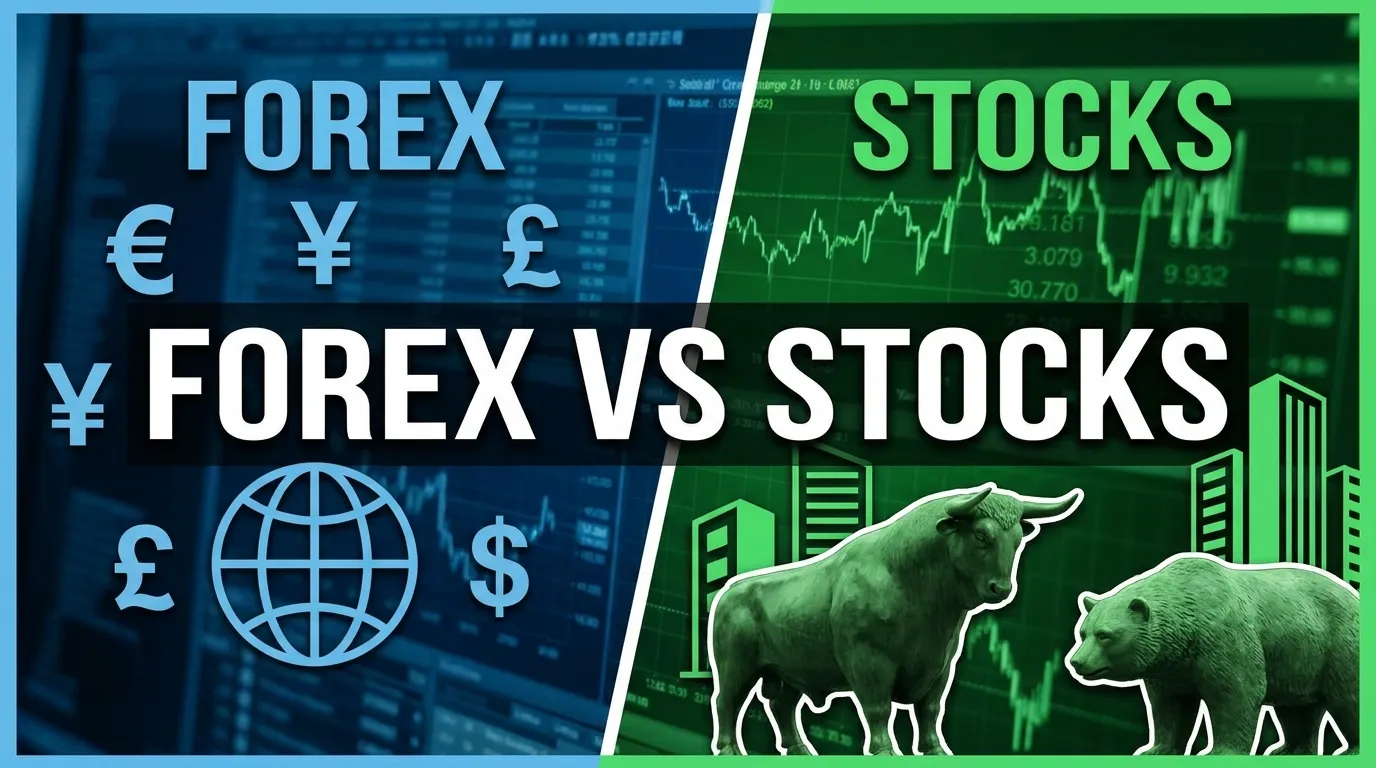
You’ve probably heard people talk about “the market” like it’s one single thing. It isn’t.
Forex and the stock market run on different hours, different mechanics, and different risk profiles entirely. Trading one well doesn’t automatically prepare you for the other.
If you’re trying to decide where to focus your time and capital, understanding forex vs stock market differences matters more than most beginners realize.
Some of these differences are obvious once pointed out. Others only show up after you’ve already opened a position and wondered why it behaves nothing like you expected.
This guide breaks down exactly how the two compare, so you can choose the market that actually fits your goals, schedule, and risk tolerance.
Forex vs Stock Market: The Quick Comparison

Forex trading means buying and selling currency pairs, like EUR/USD, based on how one currency moves against another. The stock market means buying shares of individual companies, like Apple or Tesla.
Forex trades nearly 24 hours a day, five days a week. Stock markets operate on fixed exchange hours tied to a specific country.
Forex is typically traded with leverage and priced through spreads. Stocks are usually bought outright or on margin, priced through commissions or a bid-ask spread of their own.
Neither market is objectively “better.” They reward different strategies, different temperaments, and different amounts of available time.
What You’re Actually Trading
Forex: Currency Pairs
In forex, you’re never buying one asset outright. You’re trading the relationship between two currencies, always priced as a pair.
If you’re new to this concept, this guide on how forex pairs work breaks down exactly what a pair like GBP/USD actually represents.
Stocks: Ownership in a Company

Buying a stock means owning a small piece of an actual business. Its price reflects earnings, growth expectations, industry trends, and broader economic sentiment.
That gives stocks a fundamental anchor that forex often lacks. A currency’s value depends on interest rates, trade balances, and macroeconomic policy instead of one company’s quarterly earnings.
Stock traders often analyze earnings reports, revenue growth, and industry position. Forex traders analyze economic calendars, central bank statements, and comparative strength between two economies instead of a single balance sheet.
Regulation and Market Structure
Stock markets operate through centralized exchanges, like the NYSE or the LSE, where every trade passes through a regulated exchange and is publicly recorded.
Forex works differently. It’s a decentralized, over-the-counter market, meaning trades happen directly between participants through a network of banks and brokers rather than one central exchange.
That structure affects transparency. Stock prices are quoted from a single exchange feed, while forex prices can vary slightly between brokers depending on their liquidity providers.
Neither structure is inherently unsafe, but it’s worth understanding when comparing forex vs stock market trading, especially when choosing a broker.
Correlation Between Forex and Stock Markets

The two markets aren’t isolated from each other. Interest rate decisions, inflation data, and central bank policy can move both currencies and stock indexes on the same day.
A weaker currency, for example, can make a country’s exports cheaper abroad, which sometimes benefits export-heavy companies listed on that country’s stock exchange.
That connection doesn’t mean the two markets move in lockstep. It just means macroeconomic news deserves attention regardless of which market you primarily trade.
Market Size and Liquidity
Forex is the largest financial market in the world by a wide margin, with trillions of dollars changing hands daily across global sessions.
Stock markets are enormous too, but liquidity varies dramatically by stock. A blue-chip company trades very differently from a thinly-traded small-cap stock.
That liquidity difference matters in practice. Major forex pairs like EUR/USD or GBP/USD are usually easier to enter and exit quickly, with tighter pricing, compared to lower-volume individual stocks.
Trading Hours: 24/5 vs Fixed Exchange Hours
This is one of the most practical differences for anyone comparing forex vs stock market trading.
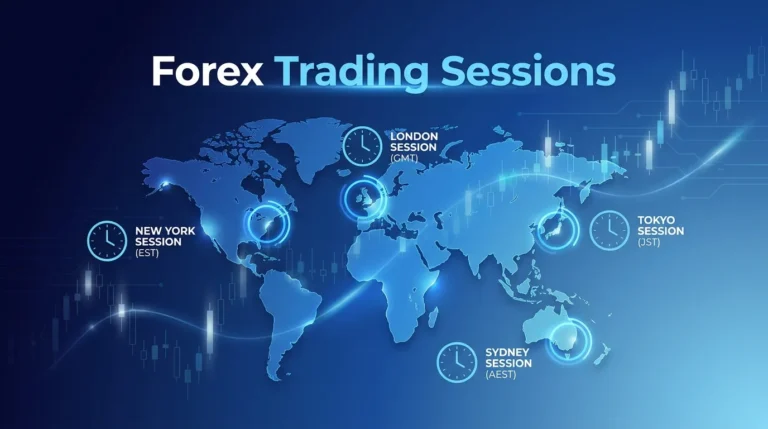
Forex trades continuously from Sunday evening through Friday evening, moving between major financial centers as each one opens and closes.
Stock markets only trade during their exchange’s set hours, typically a handful of hours per weekday, with limited pre-market and after-hours activity.
For traders with day jobs, this difference is huge. Forex offers flexibility to trade during specific overlapping sessions that fit around a regular schedule, rather than being locked into one exchange’s timetable.
Leverage: A Bigger Gap Than People Expect
Leverage is where forex and stocks really diverge, and it’s a detail that trips up a lot of newer traders moving between the two.
Retail forex brokers commonly offer leverage that lets traders control large positions with a relatively small deposit. Understanding exactly how leverage works in forex is essential before placing a single trade.
Stock trading typically involves far lower leverage limits for retail accounts, which naturally caps both potential gains and potential losses per trade.
Higher leverage isn’t automatically better. It just means smaller price moves have a bigger impact on your account, in both directions.
Costs: Spreads vs Commissions
Forex brokers typically make money through the spread, the small gap between the buy and sell price on a currency pair.
Getting familiar with how the spread affects your trading cost helps explain why frequent, small trades can quietly eat into profits.
Stock trading costs vary more by broker. Some charge a flat commission per trade, others build costs into their own bid-ask spread, and some now offer commission-free trading with wider spreads instead.
Neither structure is free. It’s worth checking exactly how your broker gets paid before assuming a platform has “no cost.”
Volatility and Risk Profile
Currency pairs tend to move in smaller daily percentage swings compared to individual stocks, especially smaller or newer companies.
Individual stocks can gap sharply on earnings reports, news events, or company-specific developments in a way major currency pairs rarely do overnight.
That said, forex volatility can spike dramatically around central bank announcements and economic data releases, catching under-prepared traders off guard.
Regardless of which market you choose, solid risk management strategies matter just as much. Position sizing and stop-loss discipline aren’t optional in either market.
A forex trader holding a position overnight generally faces less gap risk than a stock trader holding through an earnings announcement, though both still carry real overnight exposure. Understanding which events move your specific market is part of managing that risk properly.
Example: Comparing a Forex Trade and a Stock Trade
Picture a trader with a $10,000 account looking at two setups on the same day.
Forex setup: They trade EUR/USD with 1% risk, using leverage to control a standard position size while risking $100 based on their stop-loss distance.
Stock setup: They buy shares of a mid-cap company, again risking 1% of the account, but with less leverage and a position size limited by the stock’s own share price.
Both trades follow the same risk framework. The mechanics behind position sizing just look different, since currency pairs and share prices move on entirely different scales.
Tools like a pip calculator or lot calculator make it easier to translate forex risk into dollar terms, something stock traders rarely have to think about the same way.
Forex vs Stock Market: Side-by-Side Comparison
| Feature | Forex | Stock Market |
|---|---|---|
| What you trade | Currency pairs | Company shares |
| Trading hours | 24 hours, 5 days a week | Fixed exchange hours |
| Market structure | Decentralized, over-the-counter | Centralized exchange |
| Typical leverage | Higher for retail accounts | Lower for retail accounts |
| Main cost | Spread | Commission or spread |
| Price driven by | Interest rates, macro data | Earnings, company fundamentals |
Which Market Suits Which Trader?
Forex Might Fit You If:
- You want flexible trading hours around a job or other commitments
- You prefer trading based on macroeconomic trends and interest rate expectations
- You’re comfortable working with leverage and tighter, faster price movements
Stocks Might Fit You If:
- You prefer analyzing individual companies and their fundamentals
- You want to build longer-term positions rather than short-term trades
- You’d rather avoid the higher leverage typically available in forex
Plenty of traders eventually do both, using each market’s strengths for a different part of their overall approach.
Some traders use stocks for longer-term investing based on company fundamentals, while treating forex as a separate, shorter-term trading activity with its own dedicated risk rules. Keeping the two strategies mentally and financially separate tends to work better than blending them into one approach.
Getting Started: What Beginners Should Know First
Regardless of which market you pick, the fundamentals matter more than the market itself.
If forex is the direction you’re leaning toward, this beginner’s guide to forex trading is a solid starting point before opening a live account.
Before risking real capital in either market, it’s worth practicing on a demo account, defining a clear risk-per-trade rule, and writing down exactly what would make you enter or exit a position. Skipping that groundwork is one of the most common reasons new traders in both markets lose money early on.
Whichever market you start with, the underlying skills, position sizing, discipline, and patience, transfer between the two far more than most new traders expect.
Key Takeaways
- Forex trades currency pairs 24/5, while stocks trade individual companies during fixed exchange hours.
- Forex typically involves higher available leverage than stock trading for retail accounts.
- Stock prices are anchored to company fundamentals; currency prices move on macroeconomic factors.
- Forex costs are usually built into the spread, while stock costs vary by broker and commission structure.
- Neither market is inherently easier. Risk management determines success in both.
Frequently Asked Questions
Is forex riskier than the stock market?
Forex often involves higher leverage, which can increase risk if position sizing isn’t controlled. Individual stocks can carry their own risk through sharp, company-specific price moves.
Can you trade both forex and stocks at the same time?
Yes, many traders hold positions in both markets, using different accounts or strategies suited to each one’s characteristics.
Which market is better for beginners, forex or stocks?
Neither is universally easier. Stocks offer more familiar, fundamentals-driven analysis, while forex offers flexible hours and typically lower starting capital requirements.
Do forex and stock markets move together?
Sometimes. Currency values and stock markets can be influenced by the same macroeconomic events, like interest rate decisions, but they don’t always move in the same direction.
Is it harder to make money in forex than in stocks?
Neither market is inherently harder. Both require solid risk management and realistic expectations; forex simply demands more comfort with leverage and shorter-term price swings.
Final Thoughts
Comparing forex vs stock market trading really comes down to matching the market to your schedule, risk tolerance, and preferred style of analysis.
Forex offers round-the-clock access and macro-driven price action. Stocks offer ownership in real businesses and a more familiar, fundamentals-based approach.
Neither market guarantees success just because you picked the “right” one. The traders who succeed long-term share the same habits: consistent risk management, realistic expectations, and the patience to keep learning after the first few trades don’t go as planned.
Start with whichever market genuinely interests you, learn its mechanics thoroughly, and let your results, not the hype around either market, guide where you focus next.