What Percentage of Forex Traders Lose Money?

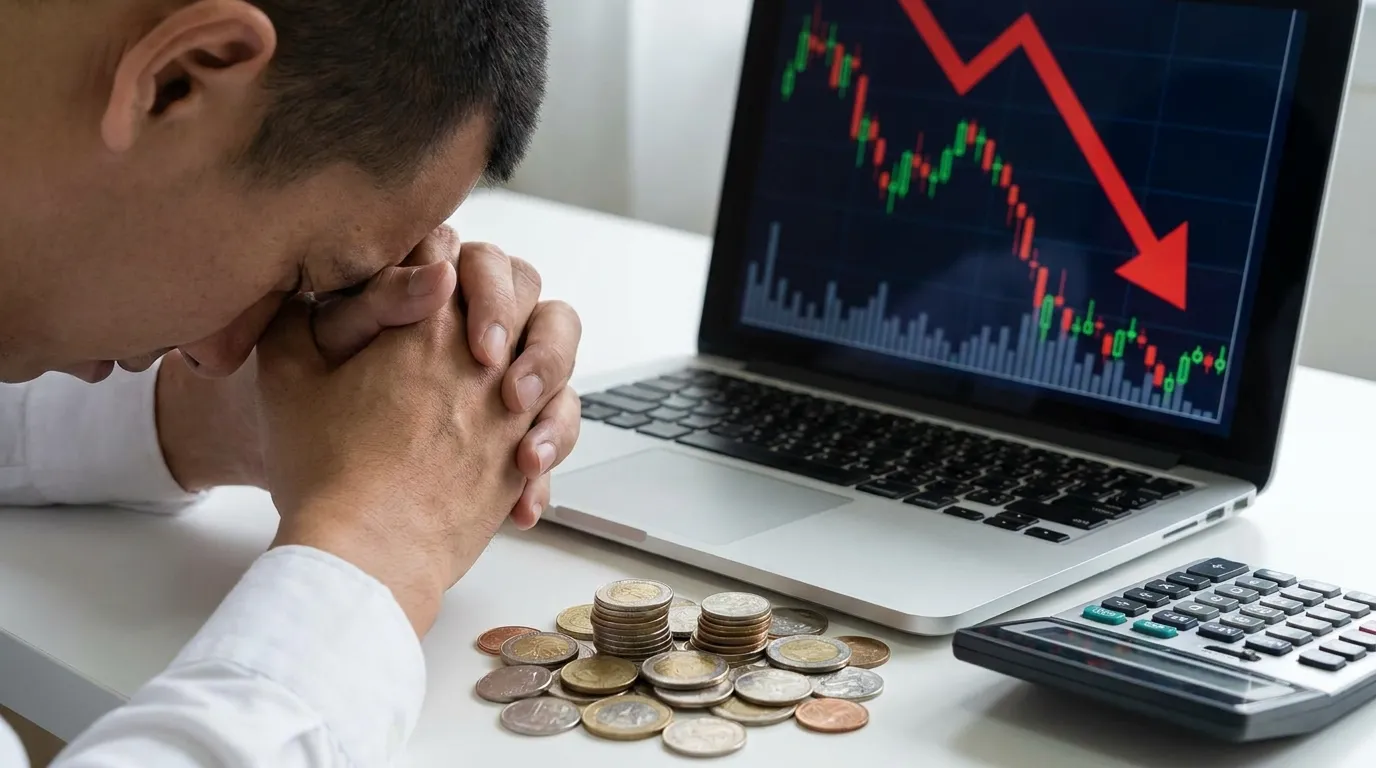
Most people who open a forex account expect to win. The numbers tell a different story.
Regulators on both sides of the Atlantic now force brokers to publish exactly how many of their retail clients make money and how many do not. The figures are remarkably consistent from broker to broker, and they are far worse than most beginners assume.
In this guide you will learn what percentage of forex traders actually lose money, where these numbers come from, why the odds are stacked the way they are, and what separates the small group of traders who stay profitable from everyone else.
- The Short Answer: How Many Forex Traders Lose Money
- Where These Numbers Actually Come From
- What US Regulators Specifically Report
- Why Forex Trading Has Such a High Failure Rate
- The Role of Leverage in Trader Losses
- Emotional Trading and the Psychology Behind Losses
- Do Any Traders Actually Make Consistent Money
- How Long It Takes to Become Profitable
- How to Improve Your Odds as a Beginner
- Common Myths About Forex Success Rates
- Frequently Asked Questions
- Conclusion
The Short Answer: How Many Forex Traders Lose Money
Across every major regulator that tracks this data, between 70% and 89% of retail forex and CFD accounts lose money in a given period. The most frequently cited range, based on mandatory European broker disclosures, is 74% to 89%.
In the United States, the Commodity Futures Trading Commission requires forex dealers to report the same type of data, and the pattern lines up closely: roughly 70% to 80% of non discretionary retail forex accounts are unprofitable in a typical quarter.
That does not mean forex trading is impossible to learn. It means the starting assumption for any new trader should be caution, not confidence. Losses are the statistical norm, not the exception, unless a trader develops real skill in risk management first.
If you are still building your foundation, our guide on what forex trading actually is is a good place to start before looking at these numbers in more depth.
Where These Numbers Actually Come From
Since 2018, the European Securities and Markets Authority has required every broker offering CFDs and forex to retail clients in the EU to display the percentage of client accounts that lost money, right on the broker’s website. This single rule created one of the most transparent data sets in all of retail finance.
The result is a standardized warning that looks something like “74% of retail investor accounts lose money when trading CFDs with this provider.” Individual broker figures vary, typically landing somewhere between 68% and 86%, but the overall pattern holds steady year after year.
The United Kingdom’s Financial Conduct Authority enforces a nearly identical disclosure rule and reports a similar range, generally clustering around 76% to 80% of retail accounts being unprofitable.
What US Regulators Specifically Report
US based traders are covered by a different but related system. The Commodity Futures Trading Commission and the National Futures Association require every Retail Foreign Exchange Dealer and Futures Commission Merchant to file quarterly reports.
These filings must state the total number of non discretionary retail forex accounts and the percentage that were profitable versus not profitable during that quarter, under CFTC Regulation 5.5(e). This requirement has existed since the Dodd Frank reforms following 2010.
Reported figures from US dealers consistently sit in the 70% to 80% unprofitable range, which lines up closely with the European data despite the two systems using different methodologies. This consistency across independent regulators is part of why the statistic is treated as reliable rather than anecdotal.
It is worth noting that US retail forex brokers already operate under some of the strictest consumer protections in the world, including a leverage cap of 50 to 1 on major pairs and 20 to 1 on minors, well below the leverage offshore brokers often advertise.
Why Forex Trading Has Such a High Failure Rate
There is no single cause. Instead, several factors compound on top of each other, and most beginners run into more than one at the same time.
Excessive leverage. Forex is one of the few retail markets where extreme leverage is standard practice, and it magnifies both gains and losses equally.
Undercapitalized accounts. Many traders start with far less capital than their strategy needs to survive a normal losing streak.
Weak risk management. Skipping or misusing a stop loss, risking too much per trade, or having no consistent position sizing method are common threads among losing accounts. Our guide on setting a stop loss correctly covers this in detail.
No tested strategy. Trading off hunches, social media tips, or news headlines without a repeatable process tends to produce results indistinguishable from gambling.
High transaction costs relative to account size. Frequent trading on a small account can quietly erode capital through spreads and commissions alone. Understanding how spread costs add up helps explain why overtrading is so damaging.
The Role of Leverage in Trader Losses
Leverage is often the single biggest amplifier of retail losses. It lets a trader control a large position with a small amount of capital, which sounds appealing until the market moves the wrong way.
For example, at 50 to 1 leverage, a mere 2% adverse move against a fully leveraged position can wipe out the entire margin behind it. Professional traders manage this risk by using far lower effective leverage than the maximum their broker allows.
This is exactly why regulators cap retail leverage in the first place. The CFTC limits US retail forex accounts to 50 to 1 on major pairs, while ESMA and the FCA cap EU and UK accounts at 30 to 1.
Before opening any position, it helps to know your exact exposure. Our Forex Risk Calculator and Lot Size Calculator can show you the real dollar risk behind a trade before you place it, rather than after.
Emotional Trading and the Psychology Behind Losses
Even traders who understand risk management on paper often abandon it in the moment. A losing trade triggers a very human urge to win the money back immediately, often by doubling position size or ignoring a stop loss altogether.
This pattern has a name in trading circles: revenge trading. It is one of the most consistently destructive habits among retail accounts, and it tends to appear right after the kind of loss that already put a trader in a fragile state of mind.
Our full breakdown of what revenge trading looks like and how to break the habit walks through the warning signs in more detail. A closely related issue, overtrading, often shows up alongside it, as frustrated traders open far more positions than their plan actually calls for.
Do Any Traders Actually Make Consistent Money
Yes, but they are a clear minority, and consistency is the operative word. Being profitable in a single favorable quarter is far more common than remaining profitable across multiple years and market conditions.
Industry data suggests roughly a quarter of retail accounts are profitable in any given quarter, but that number drops sharply over longer horizons, with only a small single digit percentage of traders remaining net profitable after several years of activity.
The traders who do last tend to share a few traits: adequate starting capital, a tested strategy with a real statistical edge, strict position sizing, and enough emotional discipline to follow their own rules during a losing streak.
How Long It Takes to Become Profitable
There is no fixed timeline, but the traders who eventually succeed rarely get there quickly. Most spend well over a year building skill through demo trading, small live positions, and a slow, deliberate increase in size as their results prove consistent.
Skipping this process is one of the most common reasons new accounts fail early. Jumping straight into a live account at full size, without first testing a strategy under real market conditions, removes the learning buffer that experienced traders rely on.
If you are trying to gauge how much capital you actually need to give yourself a reasonable runway, our article on how much money you need to start forex trading breaks this down further.
How to Improve Your Odds as a Beginner
None of this means the odds cannot be improved. A few practical habits consistently separate surviving accounts from accounts that blow up in the first few months.
- Risk a small, fixed percentage of your account on every trade, rather than a fixed dollar amount that ignores account size
- Always define your stop loss before entering a trade, not after
- Track your risk to reward ratio on every position using a framework like our Risk Reward Ratio guide
- Practice on a demo account long enough to prove a strategy works before risking real capital
- Avoid trading immediately after a loss, when emotional decision making is at its worst
- Use a calculator rather than guesswork to size every position, through tools like our Lot Size Calculator
None of these steps guarantee profitability. They do meaningfully reduce the chance of the kind of single catastrophic loss that ends most new trading accounts early.
Common Myths About Forex Success Rates
Myth: 95% of traders lose money. This exact figure is not published by any single regulator. The real, regulator sourced range is 70% to 89%, which is still sobering but more precise than the commonly repeated round number.
Myth: The house always wins because brokers want you to lose. Regulated brokers earn most of their revenue from spreads and commissions on volume, not specifically from client losses, although the structure of leveraged trading itself produces high loss rates regardless of broker incentives.
Myth: More leverage means more opportunity. Higher leverage increases both potential gains and potential losses by the same multiple. Regulators cap leverage precisely because higher leverage has been shown to increase, not decrease, the rate of retail account losses.
Frequently Asked Questions
What percentage of forex traders lose money in the US specifically? US regulated forex dealers report roughly 70% to 80% of non discretionary retail accounts as unprofitable in a typical quarter, based on quarterly filings required under CFTC Regulation 5.5(e). This is comparable to the 74% to 89% range reported under European disclosure rules.
Is the 90% failure rate statistic accurate? Not exactly. No single regulator has published an official 90% figure. The real range across ESMA, FCA, and CFTC data sits between 70% and 89%, which is close to the commonly repeated number but not identical to it.
Why do so many forex traders lose money? The main drivers are high leverage relative to account size, weak risk management, emotional decision making such as revenge trading, and trading without a tested strategy. These factors often compound rather than acting alone.
Can a beginner realistically become profitable? Yes, though it is uncommon and typically takes well over a year of deliberate practice, starting with a demo account and small live positions before scaling up. Adequate starting capital and consistent risk management matter more than any single strategy.
Does higher leverage increase the chance of losing money? Generally yes. Higher leverage magnifies both gains and losses, and regulators including the CFTC, FCA, and ESMA cap retail leverage specifically because unrestricted leverage has been linked to higher retail loss rates.
Do these statistics include everyone who has ever opened a forex account? No. The figures come from active, non discretionary retail accounts at regulated dealers during the reporting period. They do not capture every casual account or every trading style, but they are the most reliable public data available.
Are these loss rates the same across all brokers? The overall range is consistent, but individual broker figures do vary, typically between roughly 68% and 86% depending on their specific client base and the period being reported.
Conclusion
The data is consistent across every major regulator that tracks it: somewhere between 70% and 89% of retail forex traders lose money, and long term consistent profitability is achieved by only a small minority. That is not a reason to avoid learning the market, but it is a strong argument for taking risk management seriously from day one.
If you are just getting started, spend time understanding position sizing and use our Forex Risk Calculator before you place your next trade. Small, disciplined habits early on are what separate the traders who are still in the game a year from now from the majority who are not.
Financial Disclaimer
This article is for educational purposes only and does not constitute financial, investment, or trading advice. Forex trading, including trading on margin or with leverage, involves substantial risk of loss and is not suitable for all investors. You could lose more than your initial deposit.
Past performance is not indicative of future results. Trading decisions should be made based on your own research and, where appropriate, in consultation with a licensed financial professional. Forex Toolbox Pro is not a registered broker, dealer, or investment advisor.
Some links on this page may lead to affiliate partners or tools operated by Forex Toolbox Pro. Any such relationships do not influence the educational content or recommendations presented here.